



I am badly suffering from drooling.. i have been searching for this for along time. I will try your remedies.
Reply

Drooling is when there is excess saliva that comes out of a person’s mouth and we all do this every once in a while. But did you know that when this phenomenon occurs regularly and excessively, it can be a sign of a developing disease or some malfunction taking place in the body?
We at Bright Side decided to find out what the reasons are behind drooling and how we can decrease it or stop it from happening.
When we sleep our facial muscles, as well as our swallowing reflexes, are totally relaxed. Since saliva gets accumulated in the mouth while we sleep, it can slowly start dripping because the relaxed facial muscles may lead to a slightly open mouth. Therefore, we end up having a wet pillow that’s not very comfortable to sleep on.
Excess drooling or hypersalivation can be a sign of a neurological disease or the result of nasal congestion. Also, people who already had issues with health, like a stroke, tend to drool more often and more excessively.
One of the main reasons for drooling is a blocked nose, which makes a person breathe through their mouth and may lead to drooling. Cleaning and unblocking nasal sinuses could be a good way out of having a wet pillow every night. Here are some ways that can help unclog your sinuses:
Also, make sure you treat any nasal infection once it appears. Otherwise, you may end up getting various complications such as an eternally clogged nose, for example.
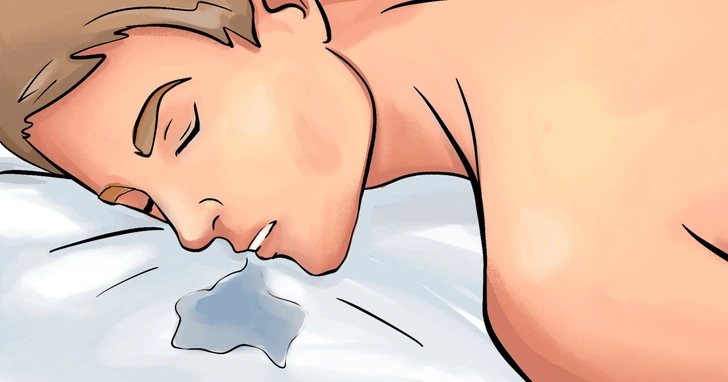

This might sound pretty obvious but sleeping on your back is a pose where all the saliva produced by your body stays in your mouth and doesn’t drool out. Conversely, if you sleep on your side or on your belly, the accumulated saliva will likely drip out of your mouth and on to the pillow.
If you feel it’s too difficult to stay in one position for the entire night, try tucking yourself in to stabilize your body.
Sleep apnea is a major disorder where a person’s breathing doesn’t go as smoothly as it should. It, in turn, leads to a constantly interrupted sleep, waking up during the night, a feeling of tiredness in the morning, and a feeling of drowsiness throughout the day.
Drooling and snoring are the main indicators of having sleep apnea. If you have any suspicion that you may have this disorder, contact your doctor to discuss in depth. Remember that factors like smoking increase the risk of getting the disorder and issues with breathing in general.
Extra weight plays a crucial role in your sleeping process. More than half of the population in the USA that suffer from sleep apnea are overweight.
Consulting a doctor can help you get the right device for your mouth that will help reduce drooling. These can be different dental appliances that provide a better mouth closure or help with swallowing and, therefore, help you get better sleep.
If you are taking any medicine, make sure it doesn’t cause the production of excess saliva. Some antibiotics, for example, could cause hypersalivation and be the reason for excess drooling.

Keeping your head on a higher pillow while you’re sleeping can reduce drooling. So remember to fluff your pillow up before you go to bed and make sure you feel comfortable lying on it.
Sometimes doctors might recommend getting surgery and removing glands. It usually happens when there are serious neurological issues hiding behind hypersalivation. Of course, before doing it, any doctor will want to try non-surgical methods first and offer surgery only in case the first ones don’t help.
Is drooling something that happens to you very often? Are you going to follow any of the recommendations from the article? Please tell us about it in the comments!
I am badly suffering from drooling.. i have been searching for this for along time. I will try your remedies.
thank you for adding this add .i was not able to sole this problem . now from this day i will follow your advice.


