The Ultimate Color Combinations Cheat Sheet

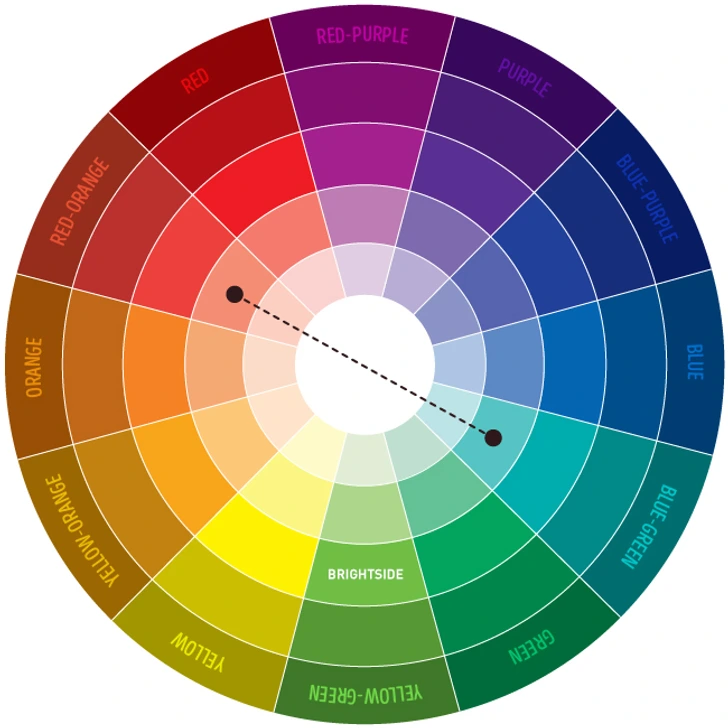
Scheme № 1: A complementary combination
Complementary (also known as supplementary or contrasting) colors are colors that sit opposite of each other on the Itten color circle. The combination of such colors creates a vivid and energizing effect, especially at maximum saturation.

Scheme № 2: The triad — a combination of three colors
A Triad is a combination of 3 colors that are equidistant from each other on the color circle. It produces a high contrast effect while preserving ’harmony.’ Such a composition looks vibrant even when you use pale and unsaturated colours.

Scheme № 3: An analogous combination
This is a combination of 2 to 5 (ideally 2 to 3) colors that are ajacent to each other on the color circle. It creates a calming, likeable impression. Here’s an example of combining analogous muted colors: yellow-orange, yellow, yellow-green, green, blue-green.

Scheme № 4: The split complementary combination
A variation on the complementary color combination. In this case, you take one primary color and two complementary ones (the colors that lie on both sides of the primary color’s antipode on the color circle). The effect created by such a scheme is just as contrasting as the one before but slightly less intense. If you feel unconfident about using the complementary scheme, use the split complementary instead.

Scheme № 5: The tetrad — a combination of four colors
This is a scheme that includes one primary and two complementary colors, plus an additional color that highlights the accents. An example: blue-green, blue-violet, orange-red, orange-yellow.


Scheme № 6: The square
A combination of 4 colors that are equidistant from each other on the color circle. In this case, the colors differ from each other in tone, but are also complementary. This creates a dynamic, vivid, and playful effect. An example: violet, orange-red, yellow, blue-green.

Combinations of individual colours
- White: combines with everything, especially blue, red and black.
- Beige: combines with blue, brown, emerald, black, red, white.
- Gray: combines with fuchsia, red, violet, pink, blue.
- Pink: combines with brown, white, mint green, olive, gray, turquoise, light blue.
- Fuchsia (dark pink): combines with gray, yellow-brown, lime, mint green, brown.
- Red: combines with yellow, white, fulvous, green, blue, black.
- Tomato-red: combines with cyan, mint green, sand, creamy-white, gray.
- Cherry-red: combines with azure, gray, light-orange, sandy, pale-yellow, beige.
- Raspberry-red: combines with white, black, damask rose.
- Brown: combines with bright-cyan, cream, pink, fawn, green, beige.
- Light-brown: combines with pale-yellow, cream-white, blue, green, purple, red.
- Dark-brown: combines with lime-yellow, cyan, mint green, purple-pink, lime.
- Reddish-brown: combines with pink, dark-brown, blue, green, purple.
- Orange: combines with cyan, blue, lilac, violet, white, black.
- Light-orange: combines with gray, brown, olive.
- Dark-orange: combines with pale-yellow, olive, brown, cherry.
- Yellow: combines with blue, lilac, light-cyan, violet, gray, black.
- Lemon-yellow: combines with cherry-red, brown, blue, gray.
- Pale-yellow: combines with fuchsia, gray, brown, shades of red, yellowish brown, blue, purple.
- Golden yellow: combines with gray, brown, azure, red, black.
- Olive: combines with orange, light-brown, brown.
- Green: combines with golden-brown, orange, salad green, yellow, brown, gray, cream, black, creamy-white.
- Salad green: combines with brown, yellowish-brown, fawn, gray, dark-blue, red, gray.
- Turquoise: combines with fuchsia, cherry-red, yellow, brown, cream, dark-violet.
- Electric colors: combines with golden-yellow, brown, light brown, gray, or silver.
- Cyan: combines with red, gray, brown, orange, pink, white, yellow.
- Dark-blue: combines with light-lilac, cyan, yellowish-green, brown, gray, pale-yellow, orange, green, red, white.
- Lilac: combines with orange, pink, dark-violet, olive, gray, yellow, white.
- Dark-violet: combines with golden-brown, pale-yellow, gray, turquoise, mint green, light-orange.
- Black is a universal colour — it looks elegant in any combination, especially with orange, pink, salad green, white, red, mauvish, or yellow.
Comments

WOWOW

I don't know about this someone helps me

bad
pig
pig

Related Reads
I Expected Something Special for My 50th Birthday — His Gift Left Me Humiliated

10 Moments That Prove Sweet Kindness Still Lives in the People Around Us

10 Airline Moments That Teach Us the Best Things We Pack for Travel Are Kindness and Compassion

10 American Summer Moments When Kindness Proved a Judgmental Stranger Wrong

12 Moments of Wisdom That Prove Real Strength Looks Like Kindness, Compassion and Forgiveness

10 Real Hotel Moments That Prove Baking Soda and Vinegar Are Still Every Housekeeper’s Best Kept Habit

12 Family Moments That Show How Compassion and Empathy Can Fill Hearts With Happiness in 2026

19 Flea Market and Thrift Store Stories That Teach Us Every Old Object Is Waiting for Someone Who Will Love It Again

13 Animal Shelter Moments That Prove Real Compassion and Quiet Kindness Have No Pedigree

14 Acts of Wisdom That Prove Real Compassion Still Brings Happiness, Even When Loneliness Hits in 2026

15+ Stories of Grandmothers Who Taught Us What Love Is Before We Even Had a Name for It

10 Family Moments That Teach Us Kindness and Compassion Are Still the Most Viral Trends on the Internet in 2026

