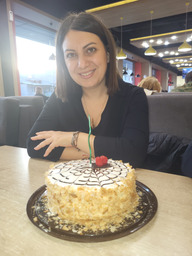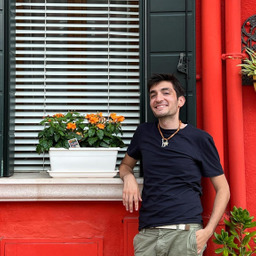

I would be proud to be your partner, beautiful eyes and smile
Reply

In 2026, kindness still shows up in the most unexpected places. Not in grand gestures of self-care or viral moments, but in a neighbor who notices, a stranger who stays, a colleague who speaks up and a parent who shows up long after anyone expected them to.
A large-scale research of more than 12,000 people across 12 countries by Gallup and Workhuman found that people who receive recognition and gratitude from those around them are up to 4 times more likely to feel that someone genuinely cares about their wellbeing and mental health, and up to 2 times more likely to be thriving in their overall life. Yet most people are still waiting for someone to simply check on them.
These 12 real moments are proof that compassion and generosity still show up for the person nobody checked on, almost always from the direction nobody expected.
I have a visible facial difference and have spent most of my adult life managing the way strangers react to my face in public spaces: the stares, the double takes, the children asking questions that their parents immediately shush.
I had a bad day last year, the kind where everything compounds, and I was on the subway on the way home feeling very much like I wanted to be invisible. A woman sat down across from me and after a moment said, “I hope this isn’t weird but you have the most remarkable eyes I have ever seen.”
She said it the way you say something true, not carefully, just plainly. Then she went back to her book. She did not wait for a response or make it into a conversation. She just said the thing she had apparently thought and went back to her reading.
I sat with that for the rest of the journey and most of the evening. Something that small, said that plainly, by someone who wanted absolutely nothing back from it, landed somewhere I did not expect.

I would be proud to be your partner, beautiful eyes and smile


I think your very pretty. The checks just add character and strength.
My first week as a junior doctor was the hardest week of my professional life. Not because of the medicine but because of the exhaustion and the disorientation of not knowing where anything was.
On my 3rd night shift a senior consultant I had never spoken to found me in a corridor at 3am staring at a vending machine like I had forgotten what food was. He said nothing about work. He just said, “What did you eat today?” I said I couldn’t remember.
He put his own money in the machine, handed me something, and said, “You can’t think straight on an empty stomach. Go eat that before you see your next patient.” He walked off before I could say thank you.
I have bought food for every junior doctor I have found looking like that since. It takes 2 minutes and it is the thing I remember most from that entire first week.
My grandmother’s house was being sold at auction after she went into full time care. The house had been in the family for 60 years and none of us had the money to buy it. I went just to be there, which in retrospect was a mistake because watching it sell to a developer was one of the most helpless feelings I have ever had.
Afterward a man came up to me in the car park. He had bought the house. He said he had seen me in the room and asked around and found out the history. He said he was planning to renovate rather than knock it down and asked if there was anything inside, any fixture or feature, that had particular meaning to the family.
My grandmother had a specific fireplace she had sat next to every evening for 40 years. It is still there. He sent us a photo when the renovation was done.

That is so lovely of him ❤️
I run a small bakery and last winter I had to let one of my staff go because I genuinely could not afford to keep her. She was 19, had been with me for 8 months, and was one of the hardest workers I had ever employed. I gave her as much notice as I could and wrote her the most detailed reference letter I had ever written for anyone.
3 months later a woman I had never met walked into my shop and introduced herself as the owner of a larger bakery across town. She said my former employee was now working for her and was exceptional. She said, “I just wanted to come and tell you that whatever you taught her in 8 months, you did it right. She arrived already knowing how to work.”
She had driven across town specifically to tell me that. I stood behind my counter for a while after she left not quite knowing what to do with it. It was one of the kindest things anyone has ever said to me professionally, and it came from a competitor I had never met.

Didn't realize there's so many great people ! Thank you to a6 of you.
My son had been on a waiting list for a speech therapy assessment for 14 months. 14 months of watching him struggle in school, of parent teacher meetings where everyone agreed something needed to happen and nothing did, of filling out the same forms again and filling them out again.
One afternoon I got a call from a speech therapist I had never spoken to. She said she had been covering a colleague’s caseload and had come across my son’s file and noticed how long he had been waiting and that his situation was more urgent than his position on the list suggested.
She had reorganized her own schedule to fit him in the following week. She had no obligation to do that. She had just looked at the file carefully enough to see a child who had been waiting too long and decided that was reason enough. My son started therapy 8 days later.
He is doing well now. I think about that phone call every time I hear someone say the system doesn’t care.

Those types of actions help you know there are still people out there who truly care!


The system doesn't care, but there are a good few in it that do.
I am a grief counselor and last year I accidentally received a voicemail meant for someone else. A man had called what he thought was his brother’s number and left a 4 minute message about how he was struggling after losing his job and was too embarrassed to tell anyone and just needed to say it out loud to someone even if that someone was a voicemail.
I listened to it twice. I called him back. He was mortified and kept apologizing for bothering me. I told him he had not bothered me at all and that what he had said in that message sounded like something that needed to be said to a real person not just a voicemail, and that if he ever wanted to talk properly I was a counselor and my first session was always free.
He came in the following Tuesday. He has been coming every 2 weeks for 8 months. He told me recently that the wrong number was the best thing that had happened to him that year. I told him I thought so too.
My daughter entered a regional art competition at 13 and did not place. She had worked on her piece for 6 weeks and was devastated in that specific quiet way teenagers are devastated, not crying, just gone somewhere inside themselves.
4 weeks after the results a letter arrived addressed to her personally from one of the judges, a professional artist she had never met. He had written 2 pages about her submission specifically, what he had seen in it, what he thought was exceptional about her use of color, what he thought she should develop, and what he genuinely believed she was capable of.
He said the competition had been exceptionally strong that year and that her piece had stayed with him. He had no obligation to write to anyone. He had chosen to write to her. She read that letter so many times the paper went soft at the folds.
She is studying fine art at university now. She still has the letter.
I was a social worker for 11 years and when I left my role to move to a different city I had a caseload of 23 families I had been working with, some of them for years.
The standard process is a brief handover document and an introduction to the new worker. I did not think that was enough for the families I had been involved with, some of whom had been through significant instability and for whom a change in worker was not a small thing.
I spent my last 3 weeks writing personal handover notes for every single family, not clinical summaries but actual notes about who they were, what they responded to, what their particular fears were, what had worked and what had not, the small, specific things that never make it into the official files.
My manager called me into her office on my last day and said she had read all 23 and that in 20 years she had never seen anything like them. She said, “These families are going to be okay because of what you just did.”
I have thought about those 23 families every week since I left. I hope she was right.
You know she was right.
When my dad was hospitalized I talked to every nurse, Dr or therapist who came into the room about who my dad was. Not this old sick man that they just assumed he was. It made a difference in how they treated him. They took a little more time and actually listened to answers he gave and they saw him as a person rather than just another patient.
I had been at my company for 3 years when I found out by accident that a colleague doing the same job had been earning significantly more than me since we both started. I went to HR and was told the difference was because he had negotiated harder at the offer stage and that there was nothing to be done about it now. I accepted that because I did not know what else to do.
2 weeks later I got a calendar invite from the CFO, someone I had spoken to maybe twice. I went into that meeting not knowing what to expect. She said she had heard what had happened, that she had pulled the salary data herself, and that what she had found was a pattern across the company that she was not comfortable with.
She said my salary was being corrected immediately with 18 months of back pay calculated from the point the discrepancy had begun. She said, “This should not have required you to say anything. I’m sorry it did.”
I have never forgotten that she used the word sorry. Not we will look into it. Not we appreciate you raising this. Just I’m sorry. It is a very specific and underused word in a corporate setting, and she said it like she meant it.
Im glad you stuck it out. I would have made a big scene and probably gotten fired
A teacher came into my shop one afternoon and asked if he could charge his phone for an hour. We don’t usually allow it but he looked exhausted and it was raining outside and I just said yes. He sat near the outlet, had a coffee, didn’t bother anyone, and left when his phone was charged.
About 10 minutes after he walked out I went to unplug his charger and noticed something I didn’t recognize. His phone was gone, but he had left something else plugged in instead. A small device, palm sized, with a screen and wires I didn’t recognize. I had no idea what it was.
I showed my manager and she said call 911 immediately. I called. 2 officers arrived, examined it carefully, and then one of them just said, “Turn it on.” I pressed the button on the side.
It was a digital photo frame. The slideshow started running and I just stood there watching it. Photos of our street. Our neighborhood. Strangers holding doors open for each other.
A man helping an elderly woman with her groceries in the rain. A group of kids helping a shop owner pick up boxes that had fallen outside. Our shop was in one of the photos, the front window, a woman inside visible through the glass, that was me, and the caption underneath said “the ones who say yes.”
He was a photography teacher who had been documenting small acts of kindness around the neighborhood for 2 years with his students as a classroom project. He had been leaving these frames in shops that had shown him generosity, one at a time, as a thank you.
The frame is still plugged in behind our counter. Every customer who sees it asks about it. We tell them the whole story every single time.
Why can't people charge devices? Most coffee shops and other hospitality venues have points specifically for this.
Has someone at work ever surprised you with their kindness? Tell us below.

yes
Everyone deserves kindness. It well could be that the ones whom you believe do not are the way they are because they haven't been shown enough kindness in their lives. But you are right in a sense. When you are going around being kind, you need to be able to recognize those who will try to use it against you,to their own advantage. You can still be kind, just make sure you have defined firm boundaries for yourself
and .......... Why was 911 called again? What was the reason for 911?

Old school kindness right there. No phone, no posting about it, just meant it