
YAY
The Ultimate Color Combinations Cheat Sheet

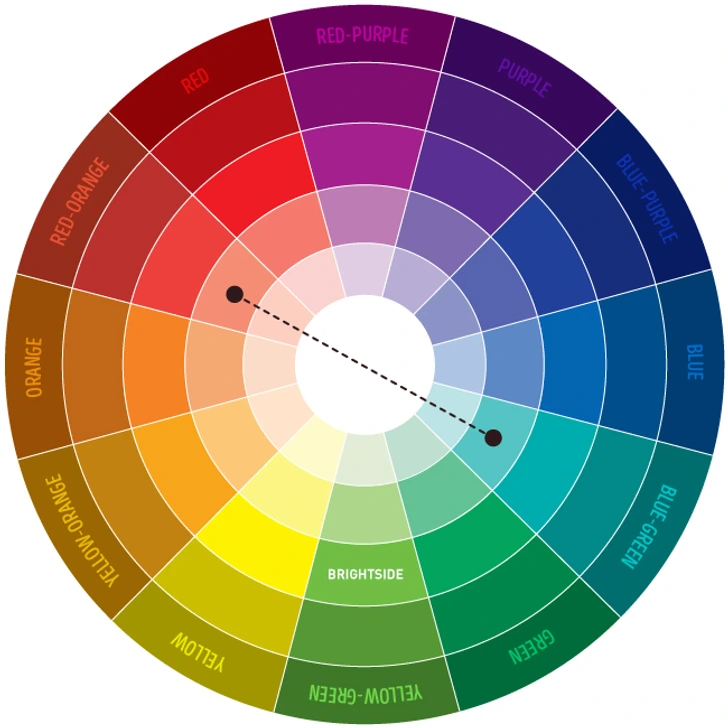
Scheme № 1: A complementary combination
Complementary (also known as supplementary or contrasting) colors are colors that sit opposite of each other on the Itten color circle. The combination of such colors creates a vivid and energizing effect, especially at maximum saturation.

Scheme № 2: The triad — a combination of three colors
A Triad is a combination of 3 colors that are equidistant from each other on the color circle. It produces a high contrast effect while preserving ’harmony.’ Such a composition looks vibrant even when you use pale and unsaturated colours.

Scheme № 3: An analogous combination
This is a combination of 2 to 5 (ideally 2 to 3) colors that are ajacent to each other on the color circle. It creates a calming, likeable impression. Here’s an example of combining analogous muted colors: yellow-orange, yellow, yellow-green, green, blue-green.

Scheme № 4: The split complementary combination
A variation on the complementary color combination. In this case, you take one primary color and two complementary ones (the colors that lie on both sides of the primary color’s antipode on the color circle). The effect created by such a scheme is just as contrasting as the one before but slightly less intense. If you feel unconfident about using the complementary scheme, use the split complementary instead.

Scheme № 5: The tetrad — a combination of four colors
This is a scheme that includes one primary and two complementary colors, plus an additional color that highlights the accents. An example: blue-green, blue-violet, orange-red, orange-yellow.

Scheme № 6: The square
A combination of 4 colors that are equidistant from each other on the color circle. In this case, the colors differ from each other in tone, but are also complementary. This creates a dynamic, vivid, and playful effect. An example: violet, orange-red, yellow, blue-green.


Combinations of individual colours
- White: combines with everything, especially blue, red and black.
- Beige: combines with blue, brown, emerald, black, red, white.
- Gray: combines with fuchsia, red, violet, pink, blue.
- Pink: combines with brown, white, mint green, olive, gray, turquoise, light blue.
- Fuchsia (dark pink): combines with gray, yellow-brown, lime, mint green, brown.
- Red: combines with yellow, white, fulvous, green, blue, black.
- Tomato-red: combines with cyan, mint green, sand, creamy-white, gray.
- Cherry-red: combines with azure, gray, light-orange, sandy, pale-yellow, beige.
- Raspberry-red: combines with white, black, damask rose.
- Brown: combines with bright-cyan, cream, pink, fawn, green, beige.
- Light-brown: combines with pale-yellow, cream-white, blue, green, purple, red.
- Dark-brown: combines with lime-yellow, cyan, mint green, purple-pink, lime.
- Reddish-brown: combines with pink, dark-brown, blue, green, purple.
- Orange: combines with cyan, blue, lilac, violet, white, black.
- Light-orange: combines with gray, brown, olive.
- Dark-orange: combines with pale-yellow, olive, brown, cherry.
- Yellow: combines with blue, lilac, light-cyan, violet, gray, black.
- Lemon-yellow: combines with cherry-red, brown, blue, gray.
- Pale-yellow: combines with fuchsia, gray, brown, shades of red, yellowish brown, blue, purple.
- Golden yellow: combines with gray, brown, azure, red, black.
- Olive: combines with orange, light-brown, brown.
- Green: combines with golden-brown, orange, salad green, yellow, brown, gray, cream, black, creamy-white.
- Salad green: combines with brown, yellowish-brown, fawn, gray, dark-blue, red, gray.
- Turquoise: combines with fuchsia, cherry-red, yellow, brown, cream, dark-violet.
- Electric colors: combines with golden-yellow, brown, light brown, gray, or silver.
- Cyan: combines with red, gray, brown, orange, pink, white, yellow.
- Dark-blue: combines with light-lilac, cyan, yellowish-green, brown, gray, pale-yellow, orange, green, red, white.
- Lilac: combines with orange, pink, dark-violet, olive, gray, yellow, white.
- Dark-violet: combines with golden-brown, pale-yellow, gray, turquoise, mint green, light-orange.
- Black is a universal colour — it looks elegant in any combination, especially with orange, pink, salad green, white, red, mauvish, or yellow.
Comments
Thank you. So helpful x
awesome. really helpful.
Thank you! This article was very helpful.
WOWOW
Related Reads
I Expected Something Special for My 50th Birthday — His Gift Left Me Humiliated

15 Moments That Remind Us Horror Isn’t Just in the Movies

My Mom Is Dating My Childhood Crush, and Keeps Forcing Us to Be “Family”

A Store Worker Mocked My Mom’s Accent—My Clapback Was Brutal, Maybe Too Brutal

My Husband’s Ex Still Calls Him for Favors—So I Gave Him a Taste of His Own Medicine

My Dad Let Me Believe a Heartbreaking Story About My Mom, and I Refuse to Let Him Get Away With It

I Refuse to Let My Spoiled Stepson Ruin Our Family

13 Times People Accidentally Uncovered Someone’s Biggest Secret

I Refuse to Be a Free Babysitter for My Stepchildren — My Comfort Comes Before Anyone

I Refused to Bring Kids on My Solo Vacation, and Now My Family Is Furious

17 Hotels That Got 5 Stars for Their Creativity in Causing Problems

I Refused to Sacrifice My Kids for My Stepdaughter